How to Photograph Elephants: Understanding Behavior in the Field
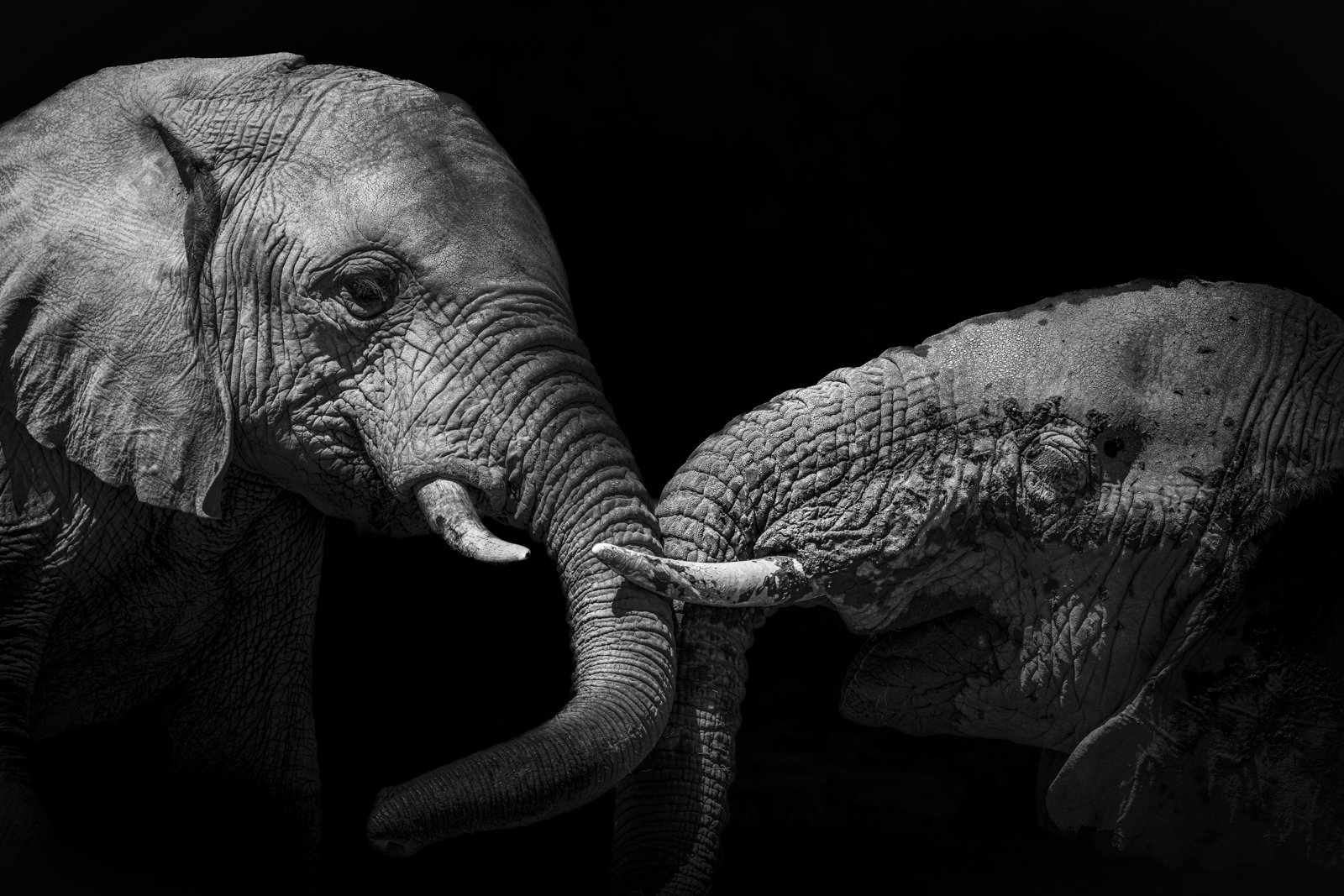
This article is part of my How to Photograph Wildlife series and focuses less on camera settings and more about learning how to read the natural world. Elephants are one of my favorite subjects to photograph and spending time with them always makes me more curious about the deep social bonds they form and how they live their daily lives.
Elephants are the largest land mammals on Earth, yet their range today is only a sliver of what it once was. African elephants are found primarily in sub-Saharan Africa, with their largest remaining populations in East and Southern Africa. Kenya and Tanzania, where I live, are especially vital ecosystems to their continued survival. They’re home to some of the continent’s most intact elephant landscapes, from the Serengeti-Mara ecosystem to the vast woodlands and savannas of southern Tanzania.
Globally, African elephant populations are estimated in the hundreds of thousands. While this reflects decades of conservation effort, it also masks significant regional variation. In East Africa, populations have shown encouraging signs of recovery in recent years. This makes the region one of the best places in the world to observe elephants living in complex social systems at relatively natural densities.
Africa is home to two distinct elephant species: the African savanna elephant (Loxodonta africana) and the African forest elephant (Loxodonta cyclotis). In East Africa, it is the savanna elephant that dominates. They’re larger in body size, with wider ears and longer, more curved tusks adapted to open grasslands and woodland environments. These elephants move across enormous home ranges shaped by rainfall, vegetation, and long-established migratory routes.
Understanding where elephants live, how they move, and the pressures they face provides essential context for interpreting their behavior. The social bonds, communication signals, and daily patterns we observe in the field are finely tuned responses to landscape, climate, and history.
With that foundation, we can look more closely at how elephants behave and what those behaviors reveal when viewed through the lens of East Africa’s wild spaces. Once we learn to recognize these patterns, we can operate more safely and respectfully in the field and prepare more deliberately for photographic moments before they unfold. That planning is where the best images begin.
Elephants Form Lifelong Social Bonds
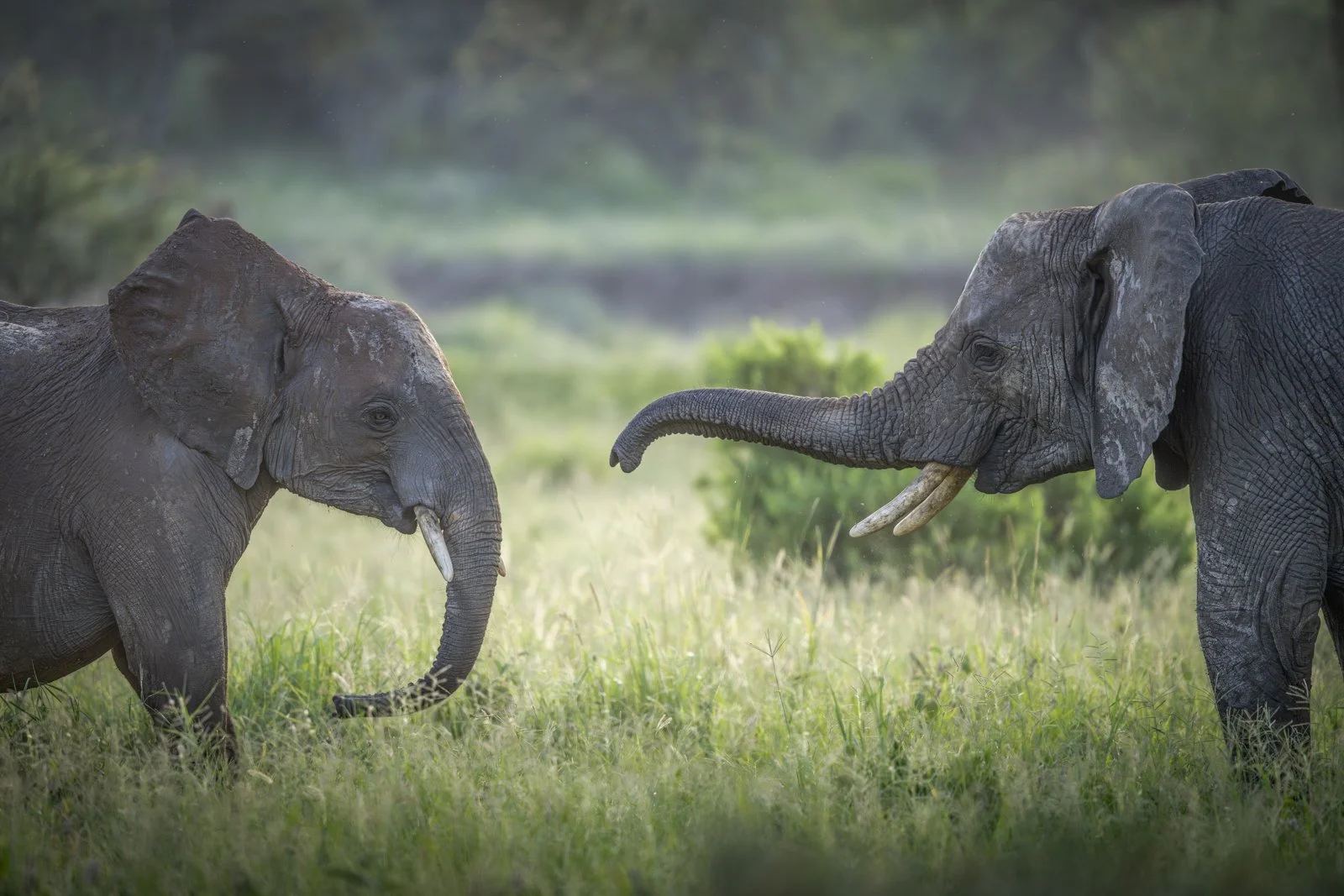
Most elephants in East Africa are part of a matriarchal family unit. These groups are led by the oldest female, whose experience guides decisions about movement, water, and safety. Calves are rarely far from multiple adults, and herd behavior is defined by constant communication and physical and vocal reassurance.
From a photographic perspective, this social structure matters. Elephant images are rarely most compelling when individuals are isolated without context. Including interactions like trunks touching, calves walking beneath bellies, or adults flanking younger animals adds narrative depth. These gestures draw the viewer in with expressions of care, hierarchy, and cohesion.
When we see a herd bunched tightly together, especially with calves in the center, it often signals caution. That tension can translate into powerful photographs, but it’s also a cue to slow down, give space, and observe carefully.
Beyond the core family unit, it’s also worth paying close attention to how elephants interact with neighboring groups. When two family units approach one another, behavior often shifts subtly before anything visible happens. Elephants will pause, lift their heads, and raise their trunks to sample the air, using scent to identify relatives, familiar allies, or rival clans long before contact is made.
A relaxed reunion may follow, marked by rumbling vocalizations, trunk touching, and loose body posture. More cautious encounters can bring tighter formations, heightened alertness, or deliberate changes in direction. For photographers, these moments of assessment are rich with narrative potential, revealing how smell, memory, and social history quietly shape what unfolds next.
Reading Body Language
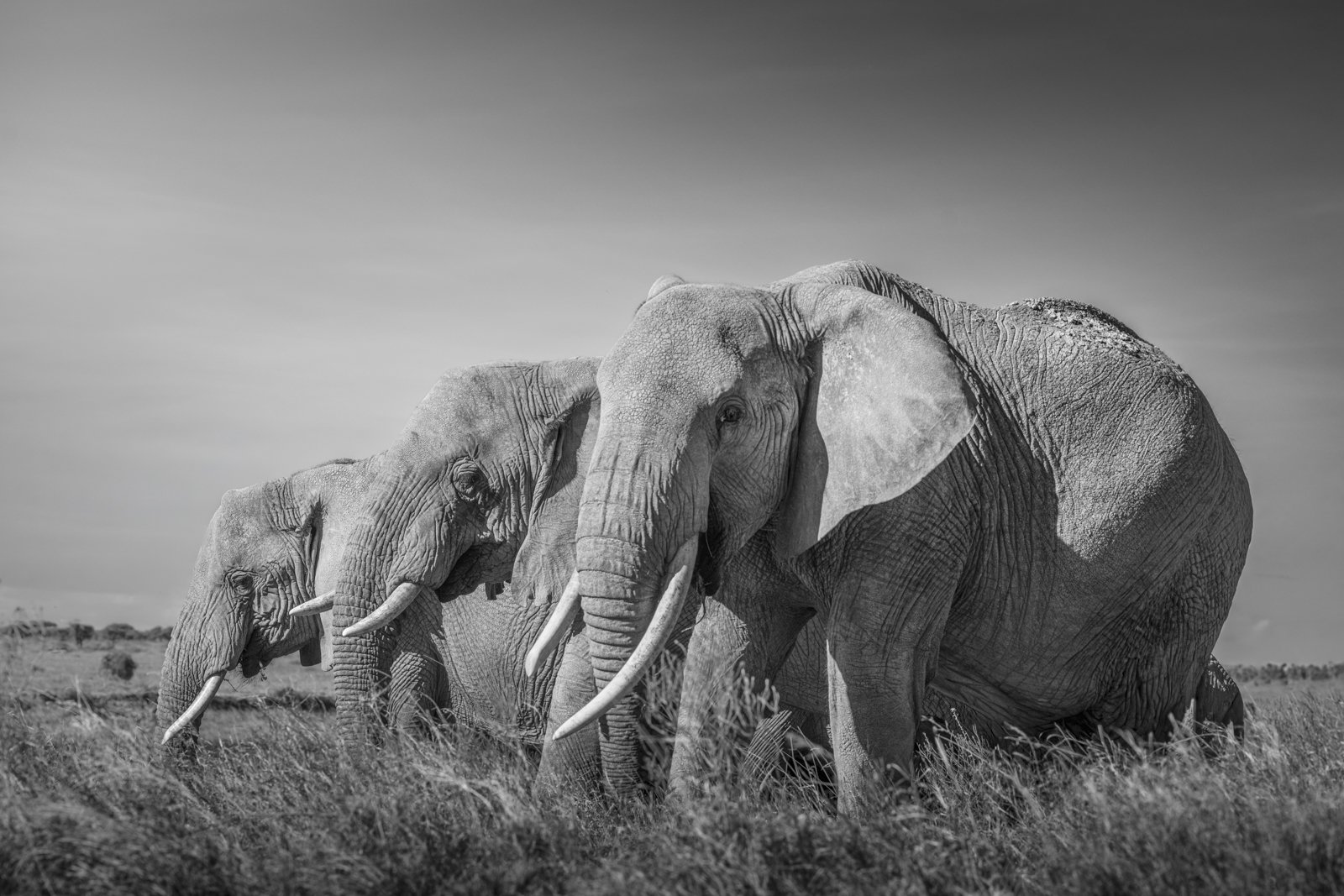
Elephants communicate through posture, ear position, and trunk movement. Learning this visual language is essential for safety and for ethical fieldcraft. Relaxed elephants move with fluid, unhurried motion. They’re usually grazing with their ears swinging loosely to shed heat, trunks exploring the ground, or just resting casually with their bodies appearing soft rather than rigid. These moments lend themselves to images that feel intimate and contemplative.
Tension looks and feels different. Ears are held wide and stiff, heads are raised high with trunks curled inward. Sudden freezing of movement often signals alertness or discomfort. Dust throwing, mock charges, or direct staring are clear messages to intruders. Our presence is often the reason for this tension and an unmistakable signal to give greater space.
Other approaching animals also elicit similar behavior and photographing these interactions requires distance and respect. Images can convey intensity and drama when handled ethically; however, we should never stress the animals if our presence is unwanted.
That’s why it’s just as important to know when not to take a photograph. Subtle warning signs like repeated head shakes, ears snapping forward and back, or an elephant closing distance with deliberate steps and a curled inward trunk are signals to disengage early. Creating space and leaving an encounter before tension escalates is the most effective way to avoid disturbing the animals.
If an elephant does commit to a charge, your priority is safety. Stay calm, avoid sudden unpredictable movements, and increase distance as quickly and smoothly as the terrain allows, always giving the animal a clear path to disengage. Reading these moments correctly, and responding with restraint, underscores the importance of respect in the field.
Elephants and the Search for Water
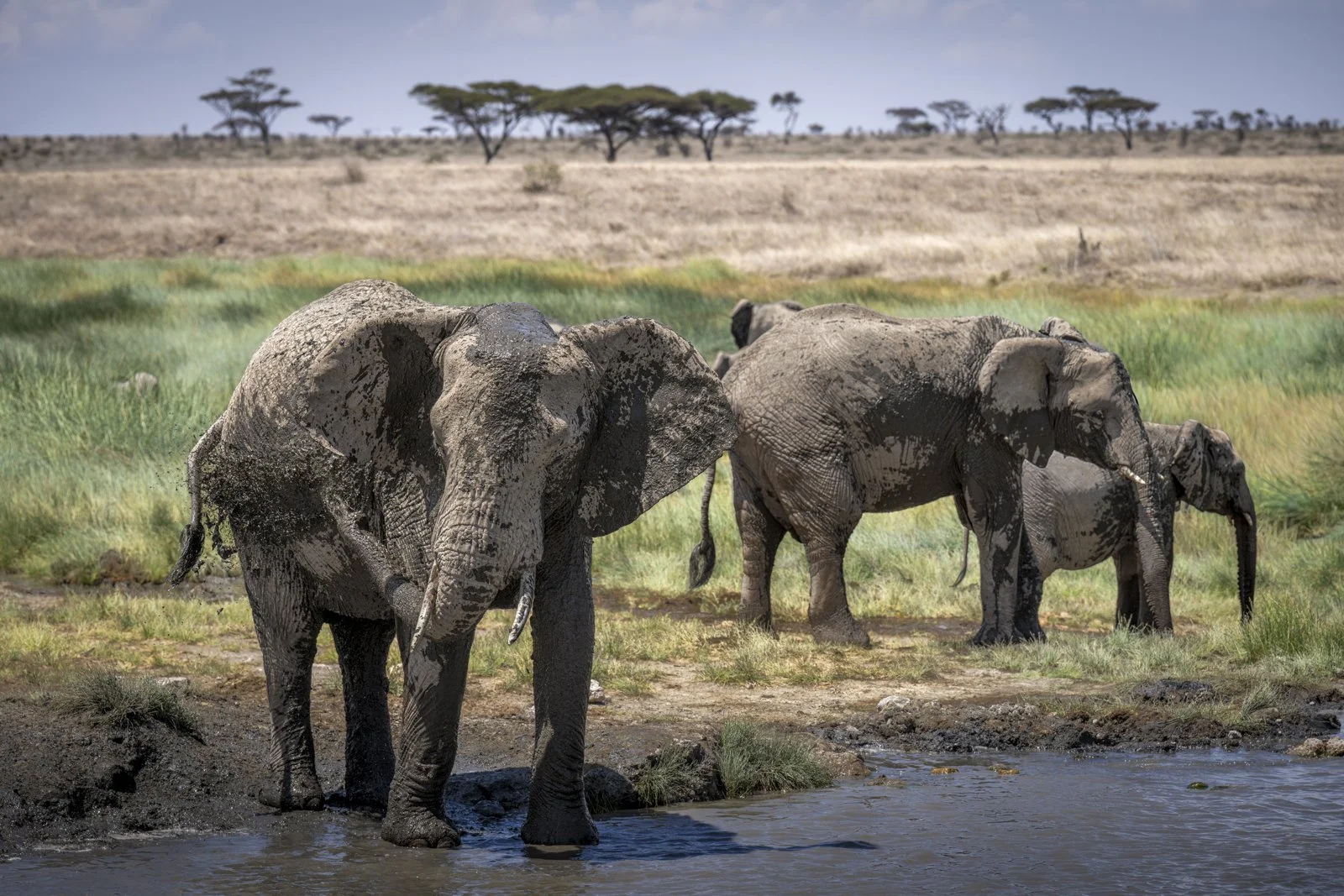
Elephants need to drink at least 70 to 100 liters of water each day and their purposeful travel toward water offers some of the strongest opportunities for photographing movement.
Daily routines are remarkably consistent across much of the Serengeti and northern Tanzania. After extended morning feeding, family groups begin to orient toward known water sources. The shift is subtle at first, then the group tightens and moves with greater intent. This predictability allows photographers to position themselves early and avoid adding pressure during moments of heightened activity. When elephants are on the move, it’s vital to give them greater space as they are extra attuned to the increase in danger as the herd risks spreading out in new terrain.
The journey to water is often the most dynamic period of the day. Elephants move with focus while remaining deeply social. As the herd nears water, the pace increases and energy builds. Arrival is often explosive and joyful to photograph. Drinking, bathing, mud wallowing, and encounters with other herds create layered scenes that reward patience and careful pre‑positioning. Allowing these moments to unfold without interference preserves both behavior and photographic opportunity.
Timing is critical in these situations. Drinking and play generate fast, expressive movement. Trunks swing. Mud and water arc through the air. Elephants repeat actions, and recognizing those patterns lets us prepare for decisive moments with intention. Even away from water, similar behaviors emerge. Elephants seek out dusty ground and repeatedly throw soil across their bodies, offering another chance to photograph repetition and flow.
Composition can shape how movement is felt. Wide frames emphasize coordinated travel and place the herd within its environment. Tighter compositions isolate form and texture. Mud‑caked skin, overlapping limbs, and familiar silhouettes draw attention to details that define elephants so clearly. Both approaches depend on understanding where the animals are going and why. When photographic choices align with behavior, our images gain clarity and intent.
Babies Offer Endless Possibilities
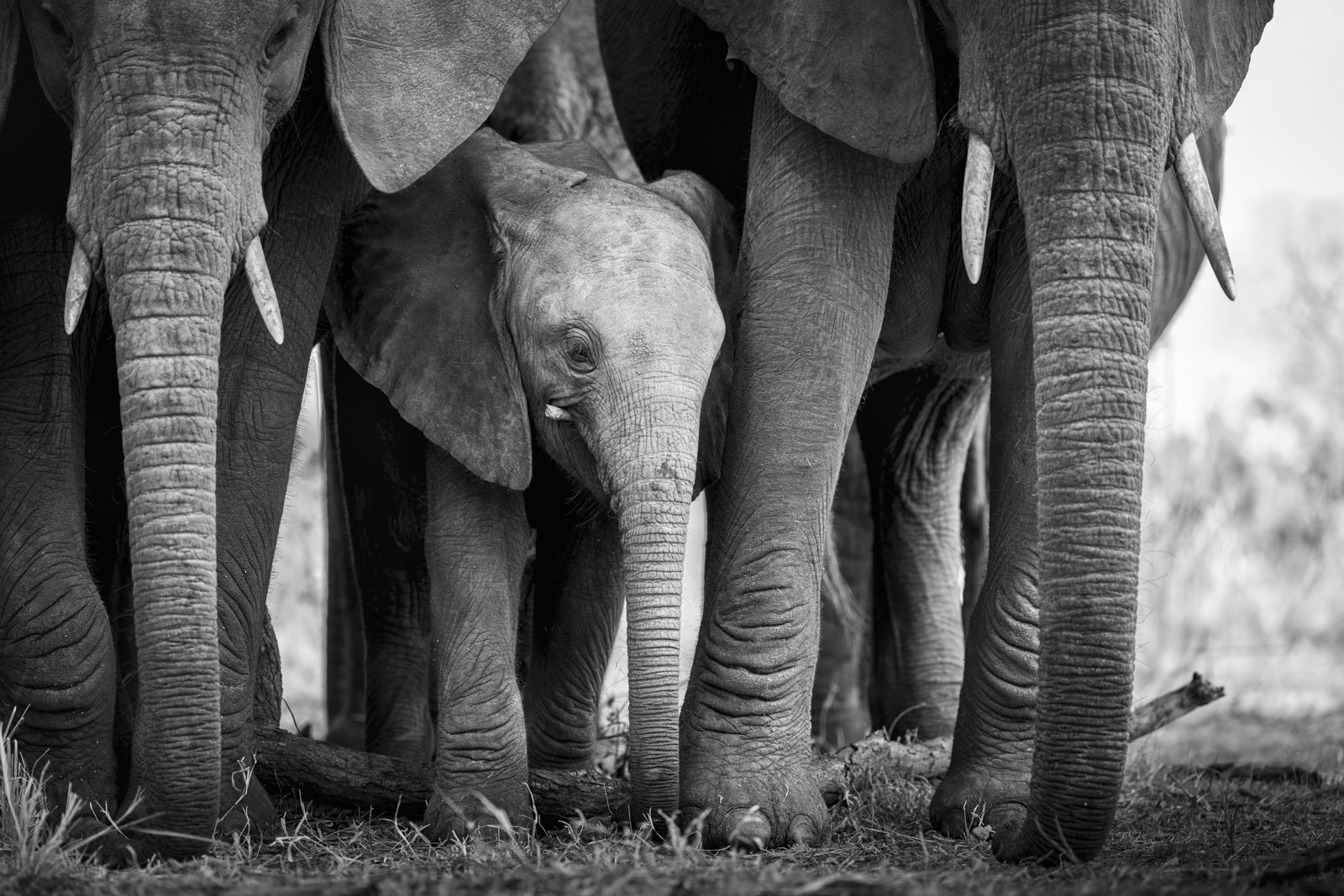
Elephant calves are always a special encounter to photograph. Their movements are playful, awkward, and unpredictable. They trip, slide, spar, and explore constantly and they are almost always being monitored by the adults. Babies haven’t yet developed muscle control over their trunks and they often swing wildly as they chase smaller animals like guinea fowl in play.
Herds with calves are inherently more sensitive to your presence and demand extra space. When self-guiding, avoid close approaches and keep both vehicle and body movements slow, predictable, and non-threatening. Never position your vehicle between a calf and other members of the herd.
From a behavioral standpoint, calves rarely move without consequence. When they step forward, adults reposition. When they stumble, the adults touch and reassure them. Photographically, calves offer moments of humor and tenderness, but the strongest images often show them in relation to adults. Scale, protection, and learning are all part of the story.
Elephant Bulls Personify Solitude and Authority
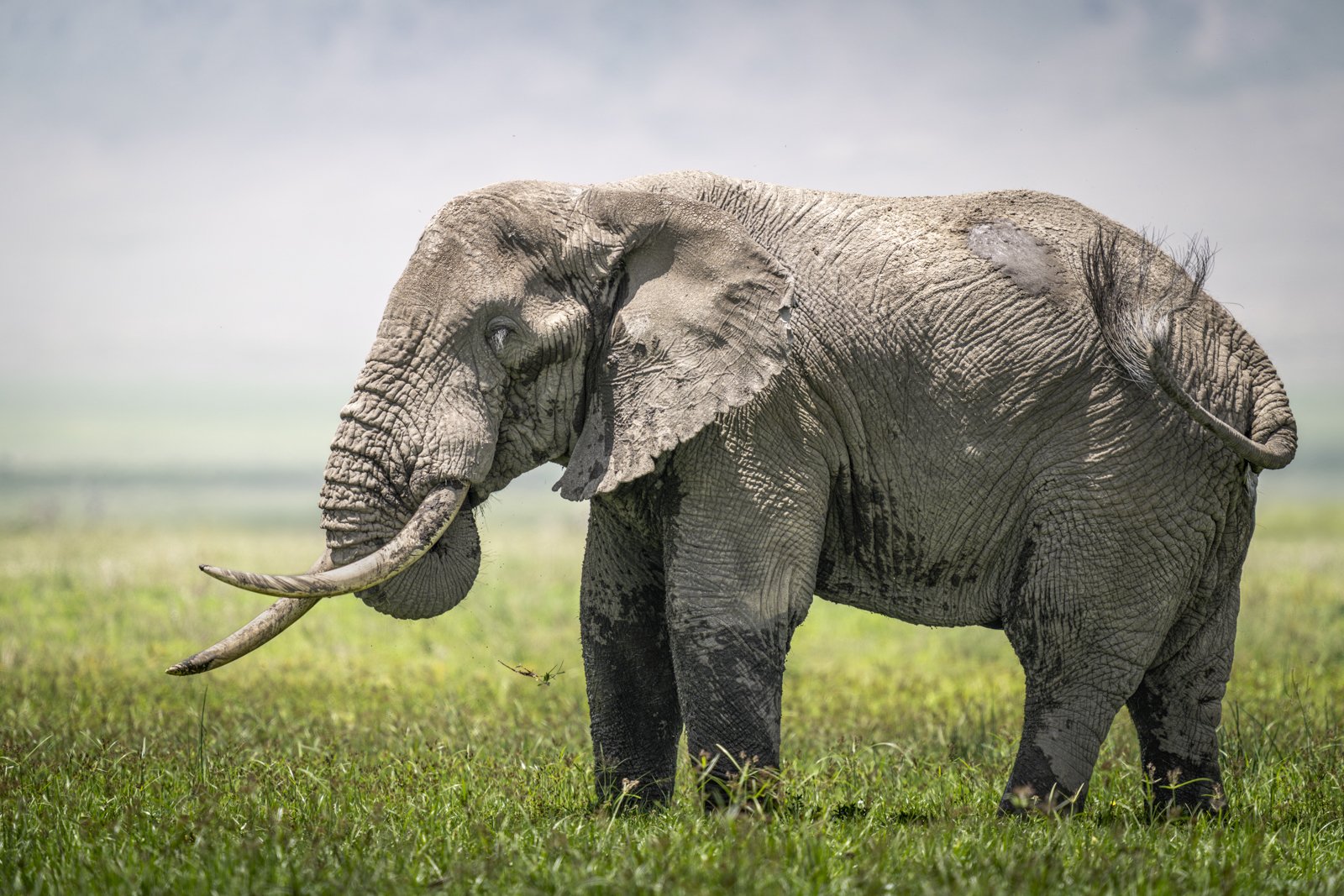
Adult bull elephants often move alone or in loose associations. Their behavior differs markedly from family groups, particularly during musth, a period of heightened testosterone marked by temporal gland secretion and a strong scent.
Bulls in musth can be unpredictable and should always be given significant space. Visually, however, male elephants’ presence is striking. Head carriage, confidence of movement, and sheer mass convey authority and independence.
When photographing bulls, look for compositions that emphasize solitude and scale. Negative space, low angles, and compelling light and skies can all reinforce the dominance and isolation that often define these animals.
Elephants and Their Environment
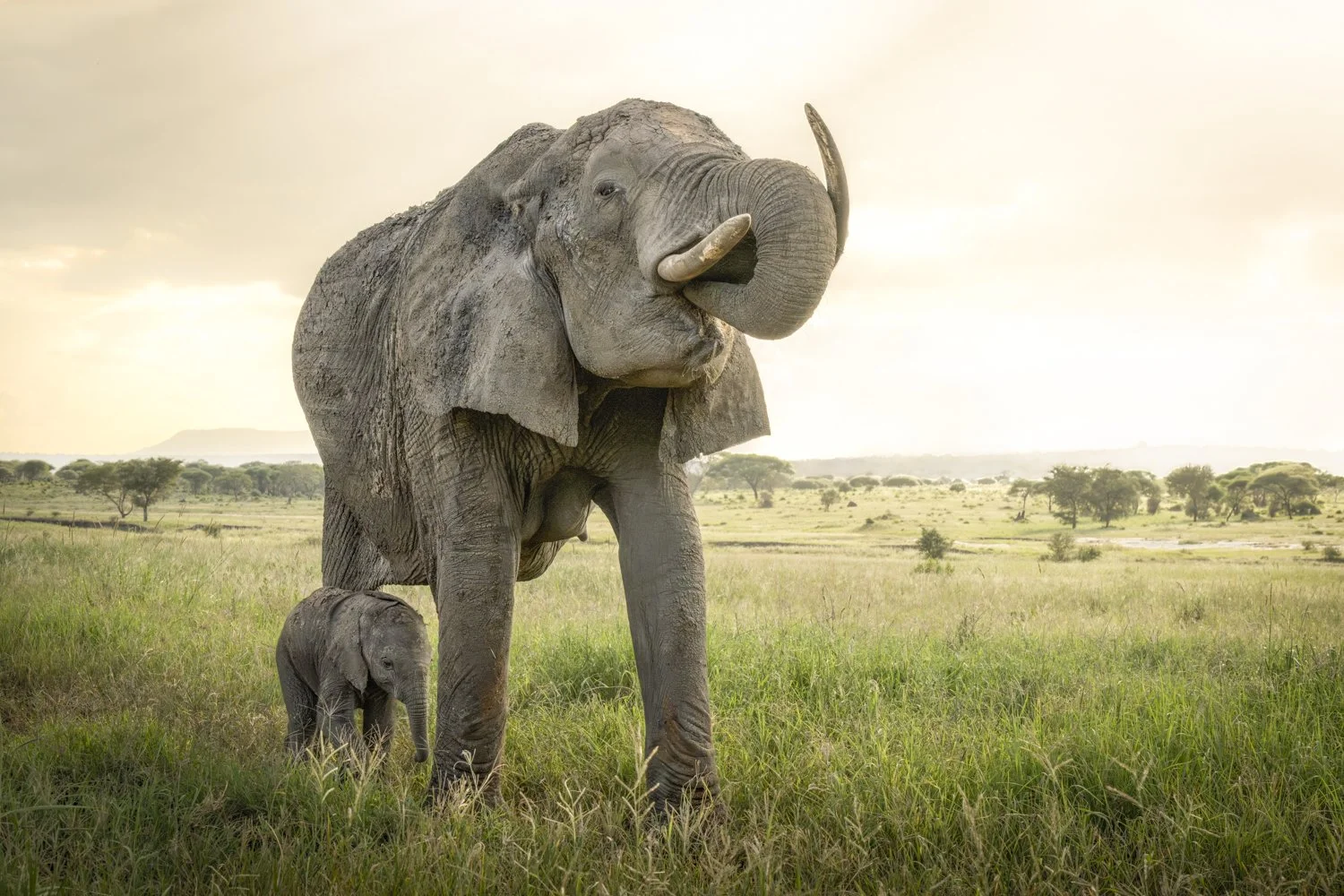
Elephants are ecosystem engineers. They shape landscapes by breaking branches, uprooting trees, digging for water, and creating pathways used by countless other species.
Including environmental context in your images adds scale and tells a fuller ecological story. Think a bull silhouetted against broken woodland, a herd moving through dust at sunset, or elephants framed by scarred trees as images that speak to their role in shaping the land.
This broader perspective aligns wildlife photography with natural history, reminding viewers that elephants are inseparable from their environment.
Photographing With Understanding
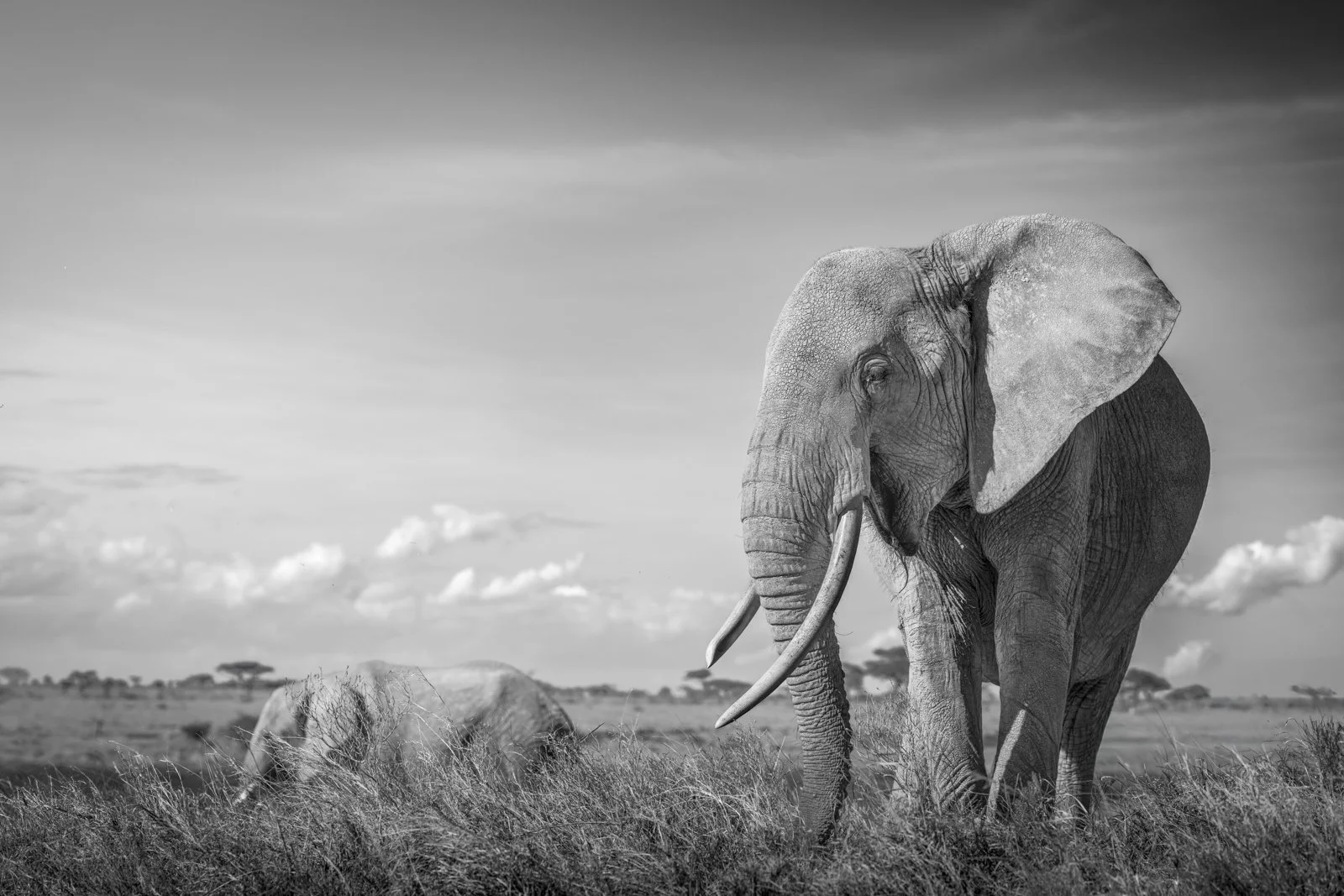
Over the years, I’ve found that the most compelling elephant photographs come from being present, patient, and respectful. When we better understand elephant behavior, it becomes easier to sense when animals are about to shift from one activity to another and prepare ourselves in advance. Most importantly, it lets us interact with these magnificent beings on their terms and as visitors to their home. That awareness leads to images that feel grounded and reflective of their unique personalities as individuals and as a group. That, more than any setting or technique, is what leads to stronger images of these remarkable animals.
If you want to experience these behaviors firsthand, I share this approach on my Serengeti photographic safaris. Time in the field, careful observation, and patience are central to how we work. The goal is simple - to come away with powerful images that reflect both the animals themselves and the respect they deserve.