How to Photograph Cheetahs: Behavior, Ecology, and Patience on the Plains
This is the latest in my ongoing series on wildlife photography, built around the premise that the strongest images come from understanding your subject. Every animal moves through its environment according to a logic shaped by evolution, competition, and survival. Learn that logic, and the moments worth photographing start to announce themselves.
Cheetahs are a good place to start, partly because they're spectacular, and partly because they're deeply misunderstood. The fastest land animal on Earth tends to get reduced to its headline act. But speed is almost incidental to a cheetah's actual life. Most of that life is quiet, resting in open grass, scanning the plains from a termite mound, and moving with deliberate care through a landscape that offers very little cover and no margin for error. The sprint, when it comes, is the last few seconds of a process that may have taken hours.
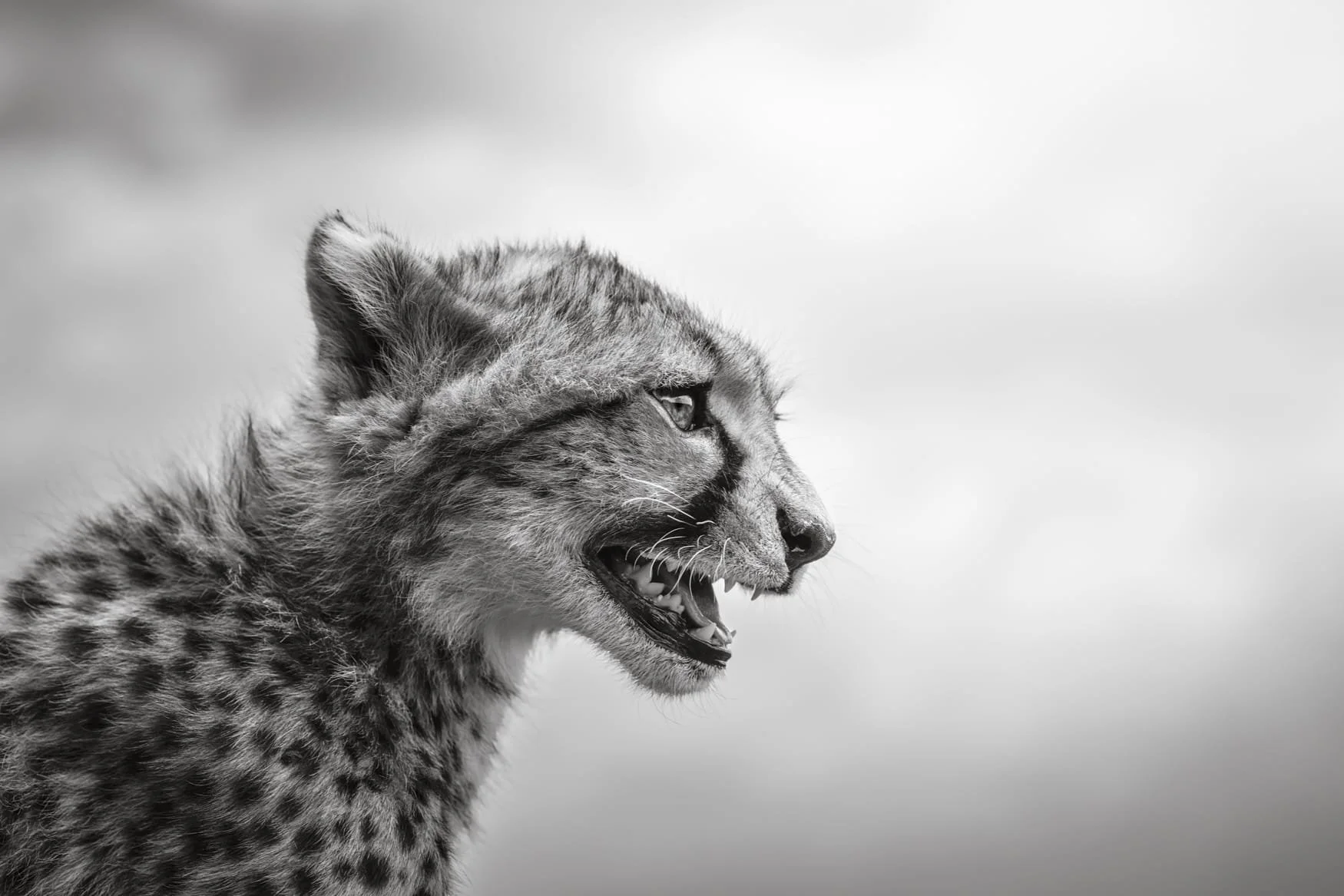
Fewer than 7,000 cheetahs remain in the wild. Their range has contracted dramatically and the populations that persist across eastern and southern Africa, with a remnant clinging on in Iran, survive in landscapes where they are neither the largest nor the most powerful predator. Understanding that position in the ecosystem is the most useful thing a photographer can bring into the field.
Cubs and the Hilarious Art of Getting It Wrong
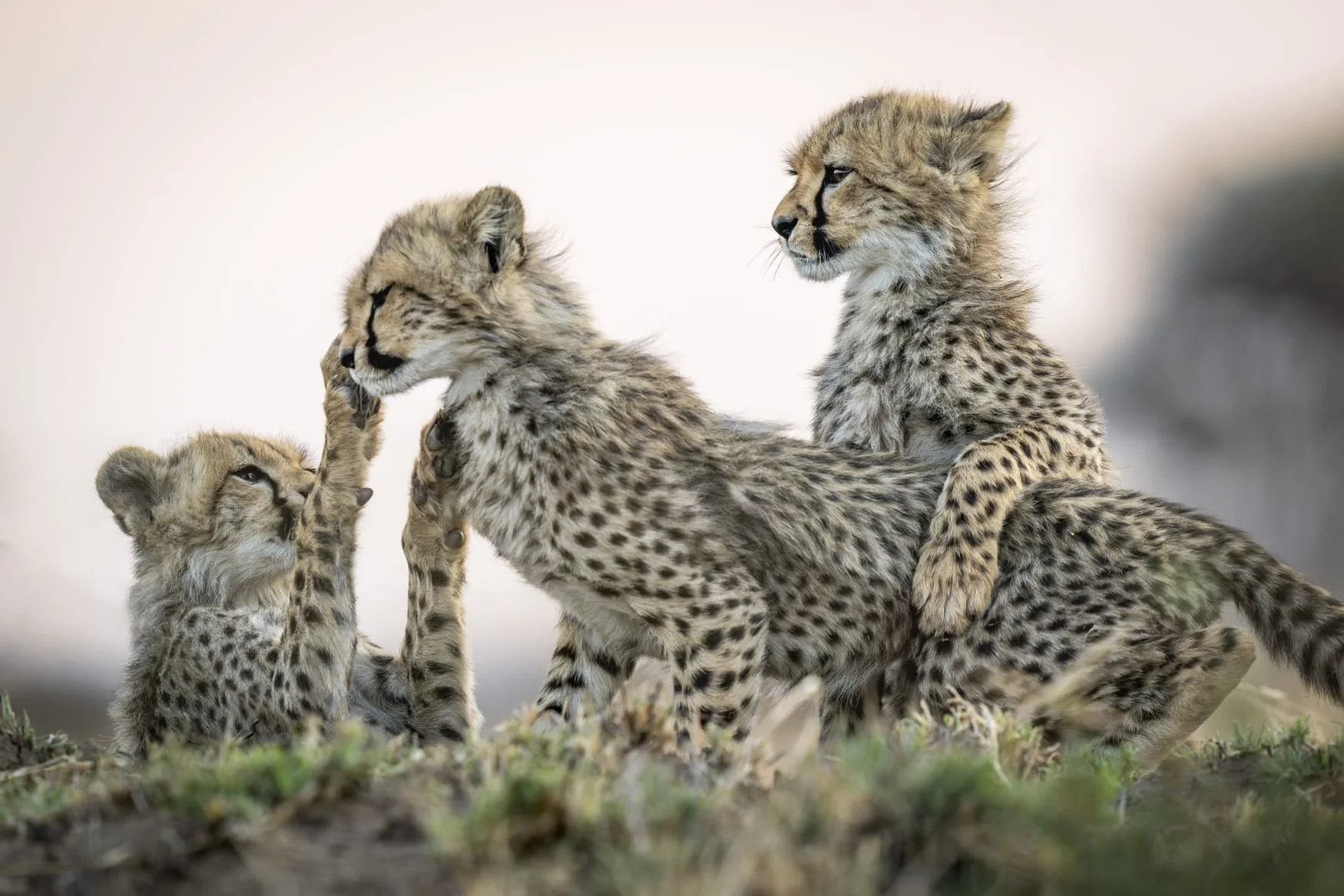
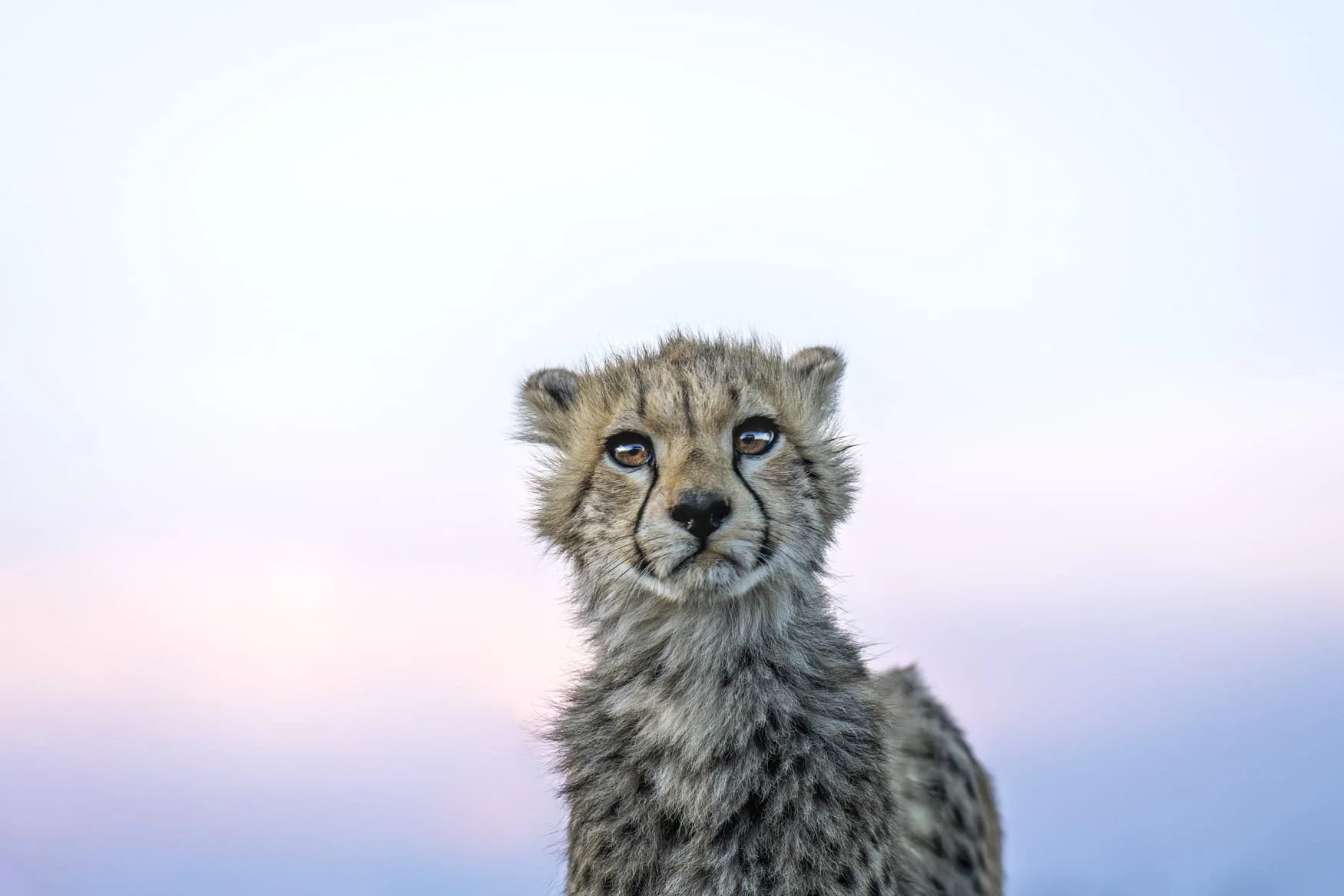
Female cheetahs raise their cubs alone, which means every decision about where to den, when to hunt, and which route to travel carries the full weight of the family's survival. For the first weeks, cubs stay hidden in dense grass while their mother hunts. Once they're mobile, they begin traveling with her across open ground, learning the landscape by moving through it.
Watching a cheetah family is an education in how predator skills are actually built. Cubs don't arrive knowing how to hunt, so they practice obsessively on anything available: insects, each other, the end of their mother's tail. I spent an evening in the Serengeti watching a female and her three juvenile cubs as the light faded, and what struck me wasn't the cuteness of it, though there was plenty of that. It was the seriousness underneath. Every mock ambush and misjudged pounce was the nervous system learning something. Young animals have this quality of joyful clumsiness that is both genuinely funny and genuinely purposeful. The mother watched all of it with the focused patience of someone who understands exactly what's at stake.
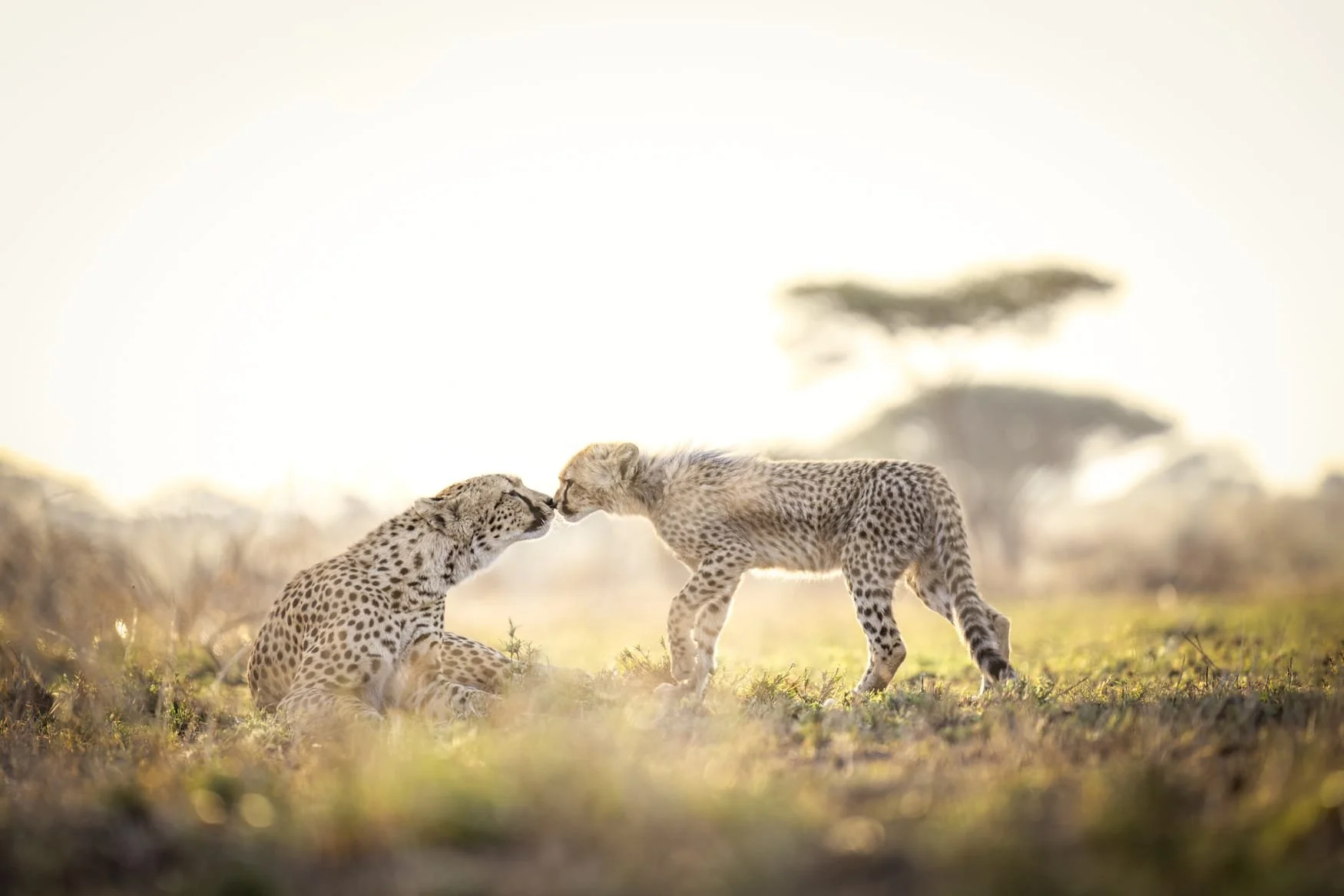
A word on ethics here, because it matters with family groups and especially those with babies. A female with cubs is already navigating significant pressure. She needs to hunt successfully and move freely in terrain where threats can appear from any direction. The responsibility on us as photographers is to minimize our addition to that pressure. In practice this means choosing your position when you arrive and staying there, letting the encounter come to you. Moving vehicles create disturbance and, with a mother trying to keep cubs settled, that disturbance can have a real cost.
Male Cheetah Coalitions
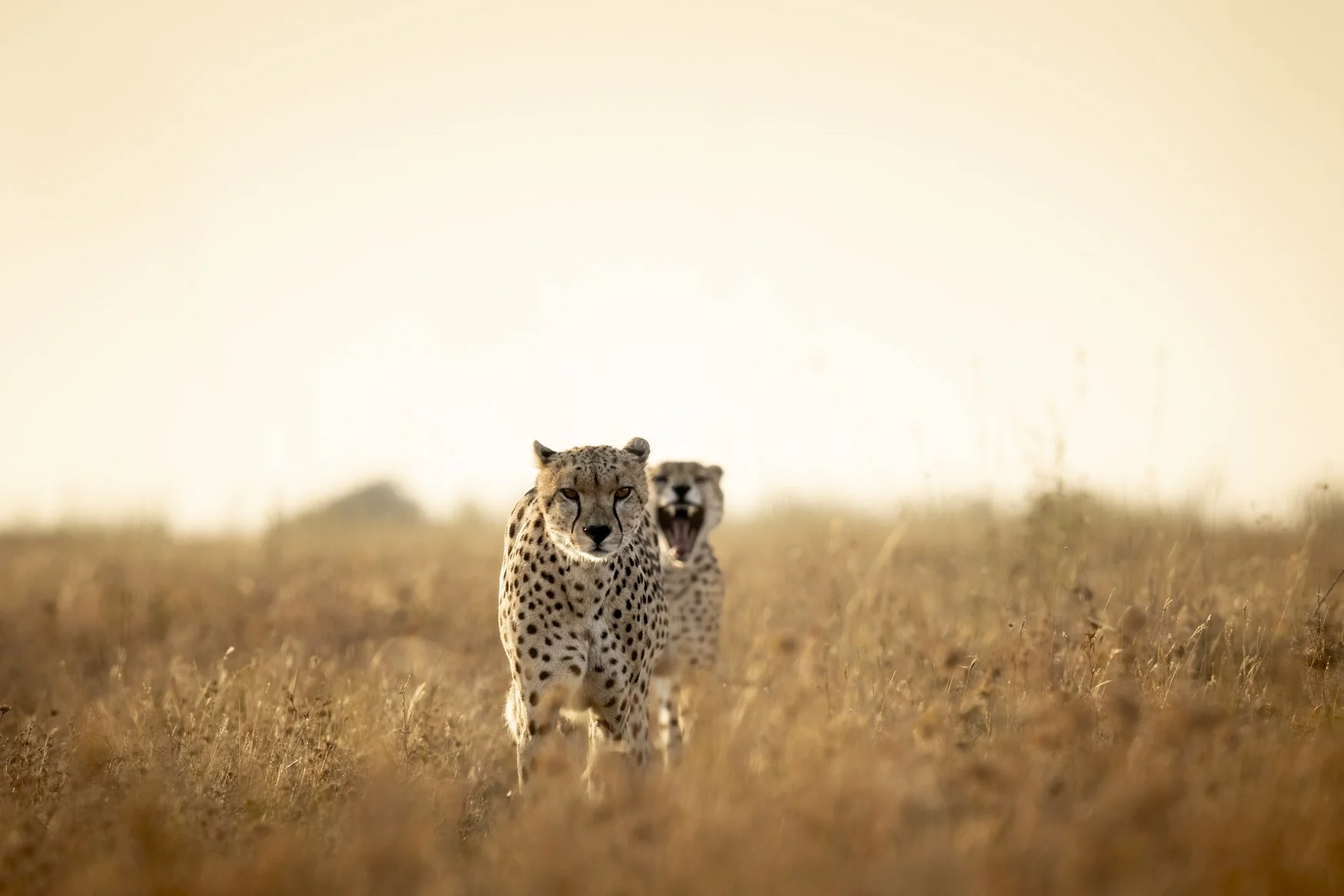
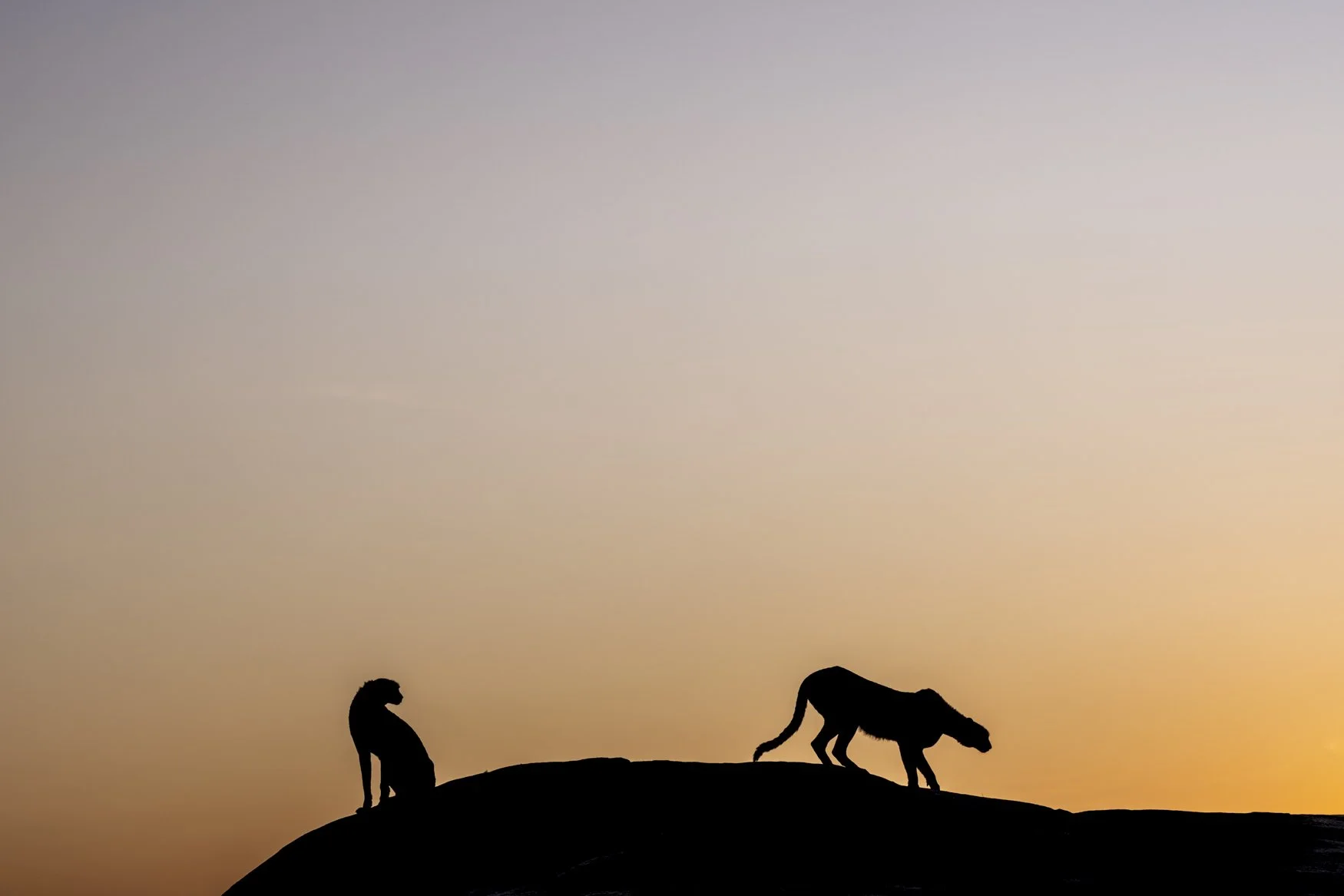
Male cheetahs’ lives are different. Brothers from the same litter often stay together into adulthood, forming coalitions that offer real advantages: stronger territory defense, greater confidence when larger predators are nearby, and companionship in a landscape that doesn't offer much of it.
These groups are quieter to observe than a family with cubs. Less chaos, more stillness. But there's something in the body language of a coalition at rest, the alignment of postures and the shared orientation toward the horizon, that communicates a social bond without requiring any obvious display of it. Photographically, that kind of subtle relationship is interesting to work with. The story is in the geometry of how they occupy space together.
The Termite Mound as Observatory
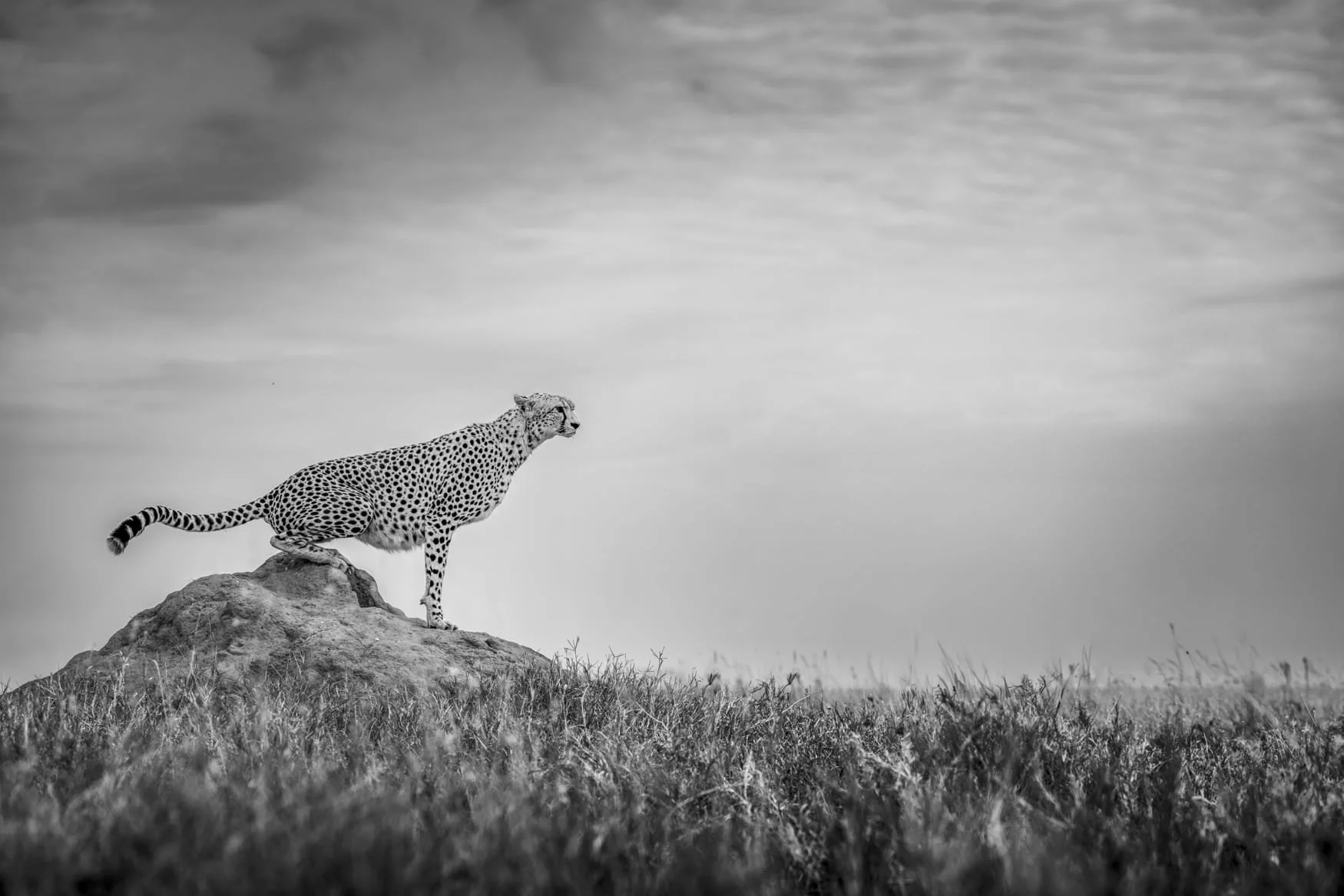
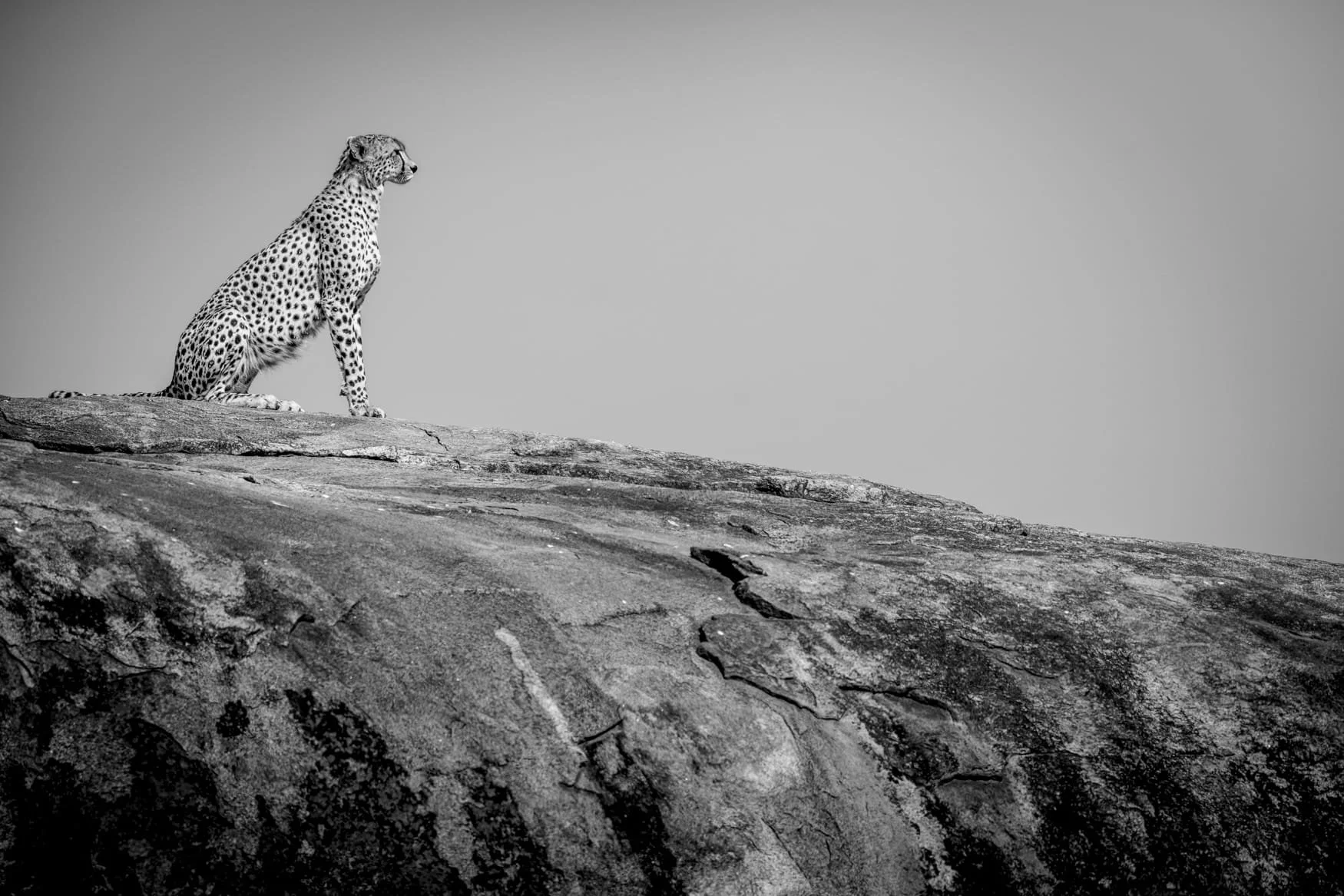
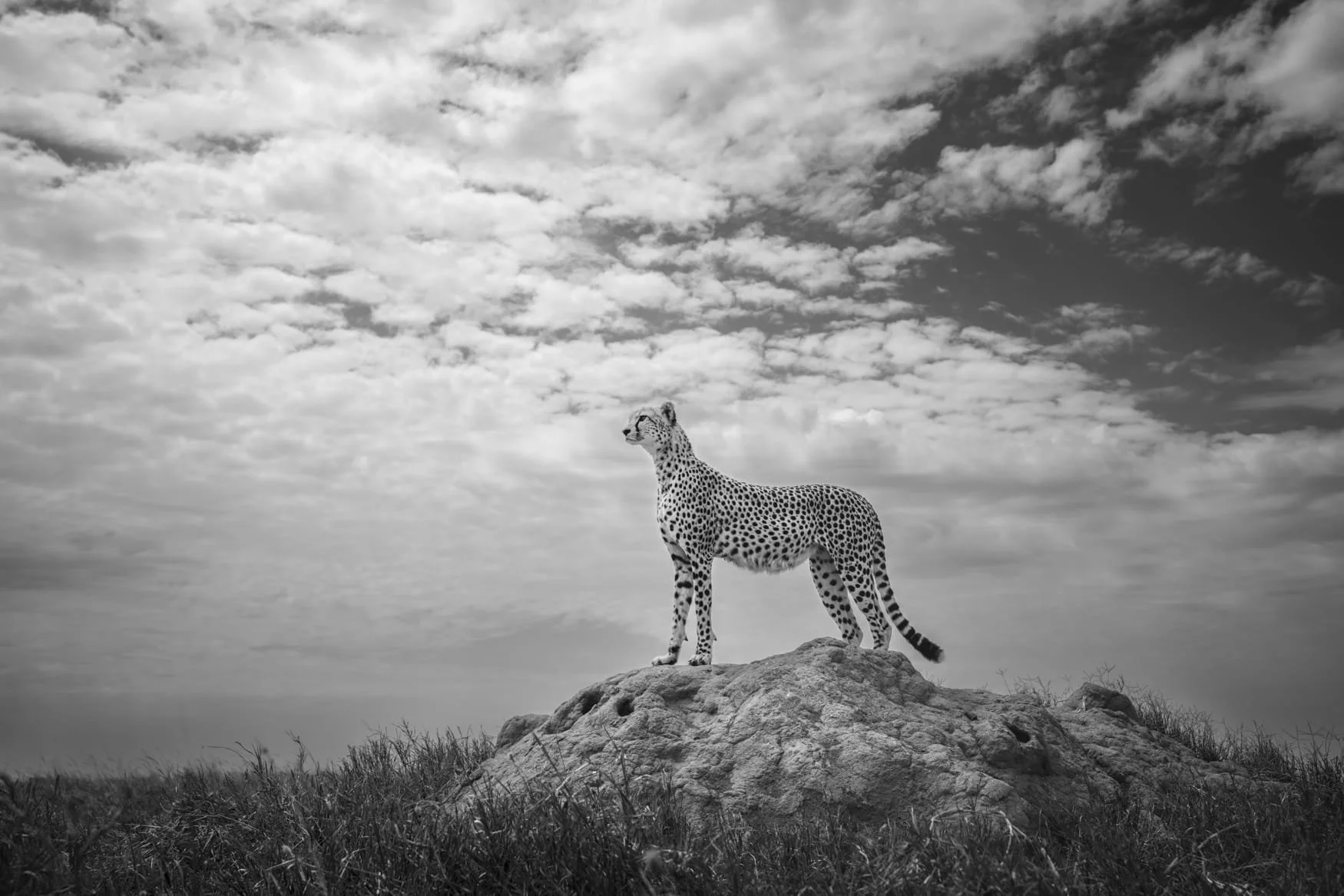
Cheetahs are visual hunters in a visual landscape, and they use every feature the terrain provides to extend their sightlines. Termite mounds are the best example: elevated, stable, surrounded by open ground. From these vantage points, cheetahs read the surrounding plains continuously, tracking both potential prey and potential threats.
This is often the most reliable way to find them. A lone figure on a mound, body relaxed, gaze moving methodically across the distance. It also happens to be one of the more compositionally satisfying situations in wildlife photography, the animal framed from a low angle against open sky, the surrounding landscape giving scale to both the cheetah and the ecosystem it depends on.
It's also worth paying close attention when a cheetah descends. The shift from scanning to moving low is a behavioral signal, not just a change in position. Something in the landscape has caught its attention and a decision has been made. What follows is worth staying for.
The Hunt, Honestly
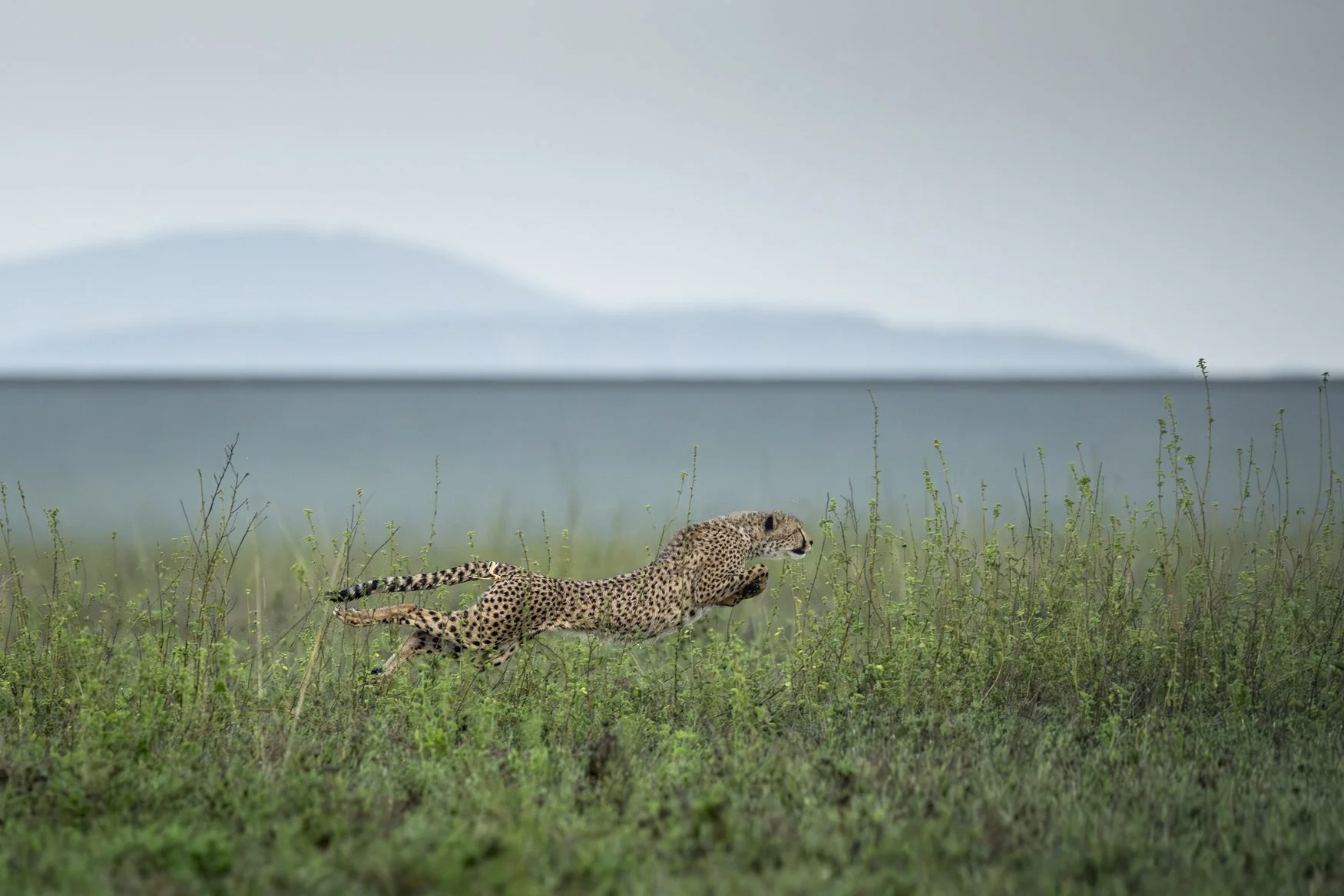
The sprint is roughly three seconds long. Everything before it can take hours. A cheetah hunting is running a continuous cost-benefit calculation. Each chase depletes significant energy, success is not guaranteed, and even a successful kill can be lost to a hyena or lion before the cheetah has finished eating. So what we actually observe, the long periods of stillness, the careful reading of potential prey, the slow approach with head low and body close to the ground, isn’t inaction. It's often the hunt, at the stage that determines whether a sprint is worth attempting at all.
For photographers, this matters enormously. The chase is genuinely difficult to capture well, and the images rarely tell you much beyond speed. The stalk is where behavior is visible: the quality of attention, the precision of movement, the moment when posture shifts and everything tightens.
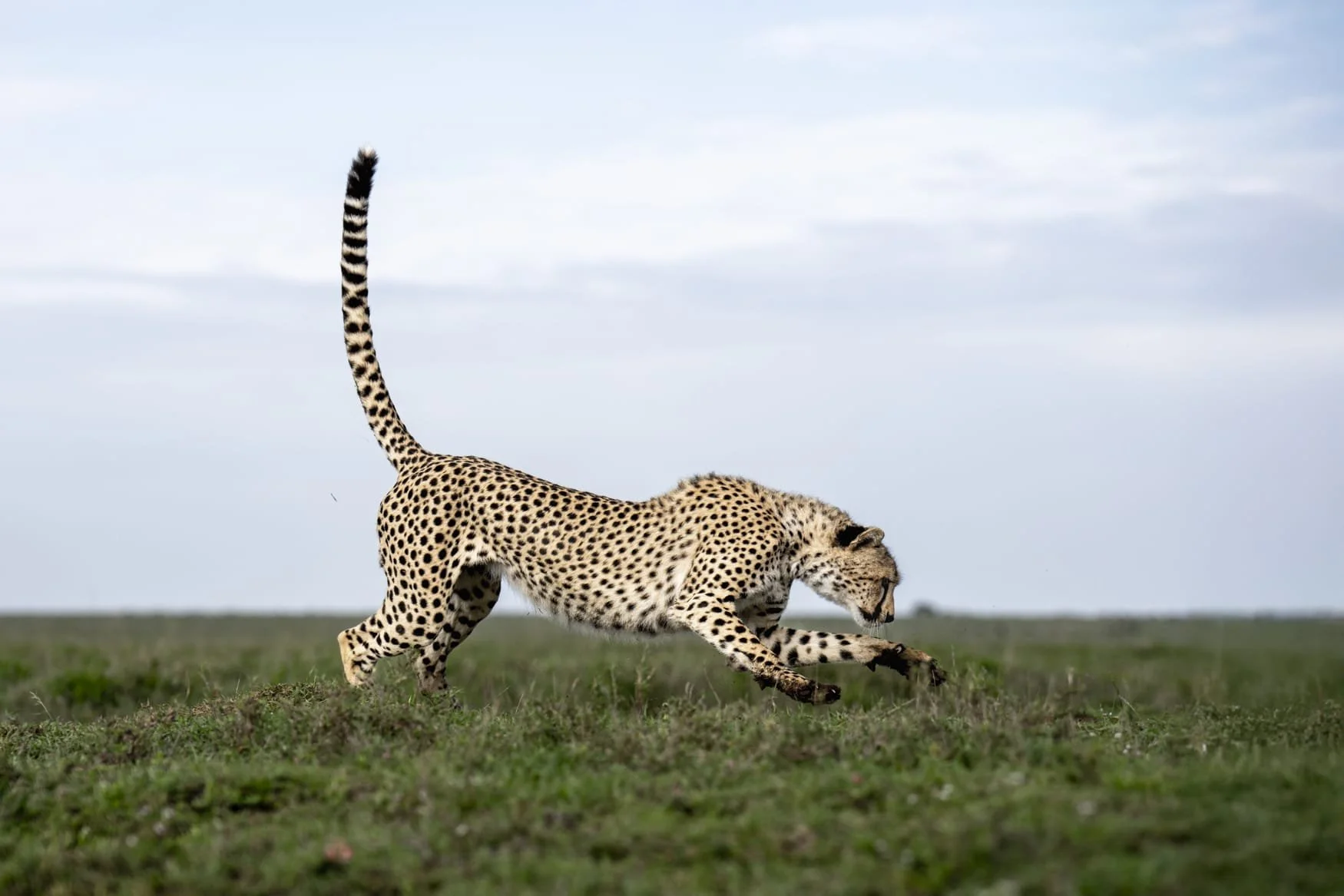
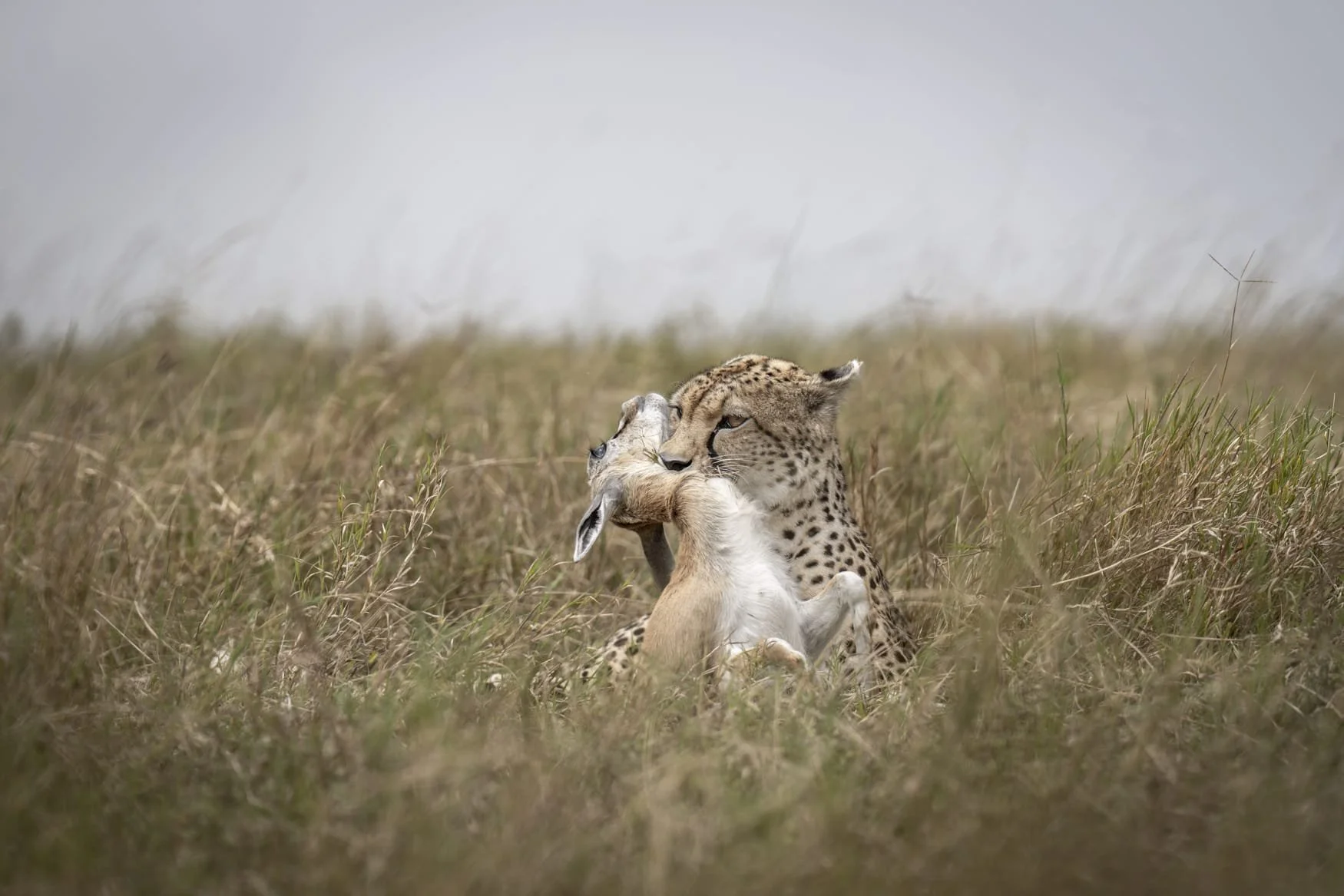
There's also an ethical dimension specific to hunting situations worth underscoring. Photographers and our vehicles are not invisible to the animals around us. A cluster of vehicles tracking a stalking cheetah creates visual disturbance that prey animals notice. We can, without intending to, alert a gazelle herd to a predator they hadn't yet detected and spoil a hunt the cheetah may have spent an hour setting up.
Our approach here is the same that we apply for most photography encounters: consider the likely direction of movement, set the background, and sit tight. Resist the urge to reposition when something looks imminent, as that moment is exactly when our movement can do the most damage.
Pressure from All Sides
Cheetahs don't sit comfortably at the top of anything. Lions, leopards, and hyenas can displace them from kills, threaten their cubs, and outmuscle them in any direct confrontation. The cheetah's response, shaped over evolutionary time, has been to build a life organized around avoidance: hunting in daylight when nocturnal competitors are less active, eating fast, yielding ground when the arithmetic turns unfavorable.
Knowing this shifts how you read images from the field. A cheetah feeding in the calm of early morning light is also, simultaneously, monitoring for movement on the horizon. That alertness is a core quality in the animal's behavior, visible when you know to look for it. Vulnerability and beauty occupying the same frame.
Slowing Down With the World’s Fastest Animal
The photographers I've seen make the strongest images of cheetahs all share one quality: they're willing to stay. To sit with an animal through the long, uneventful middle of its day and trust that the patience is accumulating toward something. Cheetah behavior has a predictability to it, from the early morning movement to the midday rest to the return to activity in late afternoon.
The quiet moments are not the gaps between photographs. The stillness on the mound, the coalition at rest, the cubs' chaotic rehearsal for a life they can't yet execute: these are where the species actually lives. Each photograph, made with that understanding, becomes a record of behavior, of relationship, of an organism navigating its world with intelligence and precision. Those are the images that keep me coming back.
The behaviors described in this article are why I return year after year to places like the Serengeti. If you'd like to pursue that kind of photography firsthand, my Serengeti photographic safaris are built around exactly this approach: time in the field, careful observation, and the patience to let remarkable things unfold. I'd love to have you along.